Loading...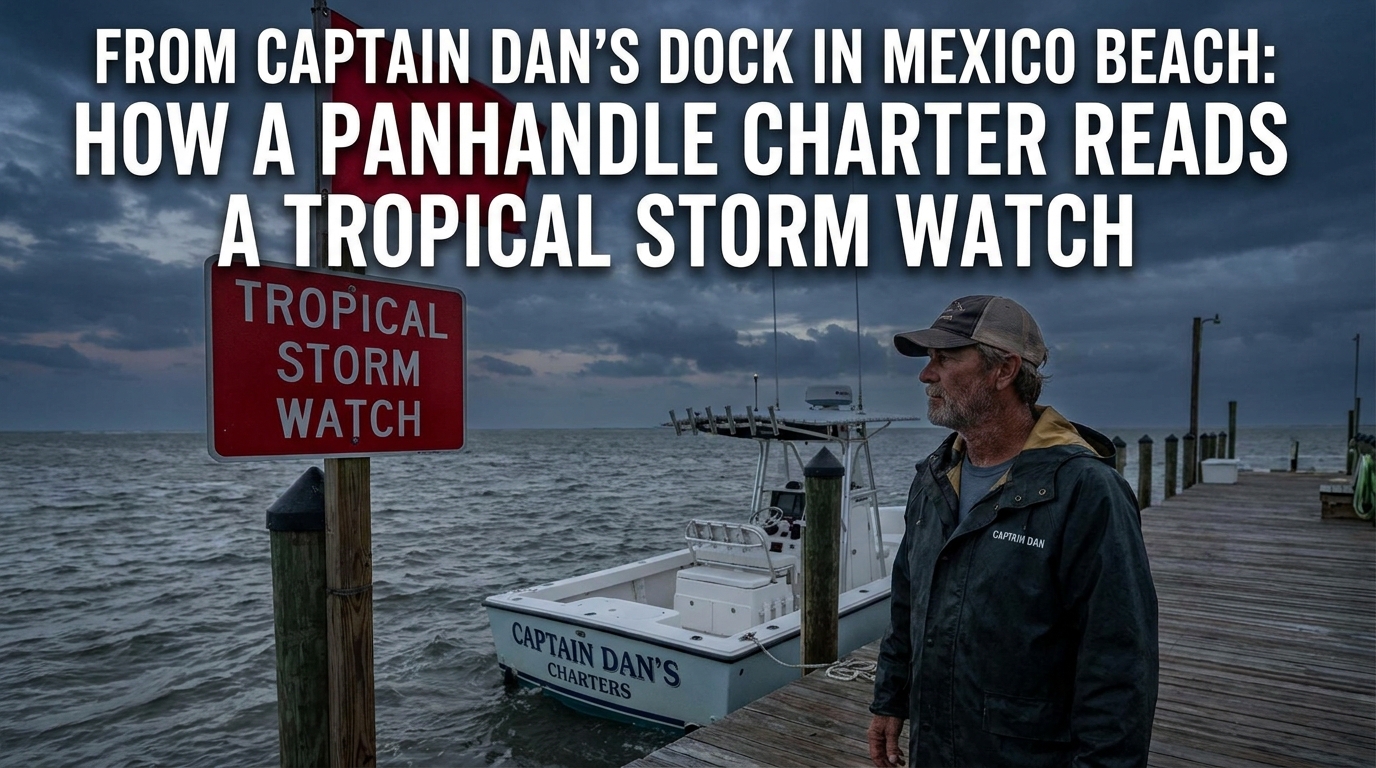
The flags aren't flying red yet, but the phone at the Mexico Beach dock is already lighting up. A Tropical Storm Watch went up this morning for the Florida Panhandle from the Ochlockonee River west to the Alabama line — the entire stretch Panhandle Adventures runs, from Mexico Beach through PCB and 30A to Destin. If your charter is on the calendar this week, here's how the call actually gets made.
The Watch, in Plain English
A Tropical Storm Watch means tropical-storm-force winds (39+ mph) are possible within 48 hours. It's not a Warning yet, and it's not a hurricane. But it's the moment when a working captain starts reading the marine forecast every three hours instead of once a day, and when guests start wondering whether their long-planned Gulf Coast trip is about to fall apart.
It doesn't have to. Here's Captain Dan on how the go/no-go decision unfolds — and what booked families and anglers should actually do right now.
How the Go/No-Go Call Gets Made
Charter captains don't cancel off cable news. They cancel off wind speed, wave period, and what the passes are doing.
"I'm watching two numbers — sustained wind out of the south and the seas at the pass. Once we're pushing 20-knot sustained and 4-to-6-foot at St. Andrew or the East Pass in Destin, we're not running offshore. Period. That's not a judgment call, that's just the boat and the guests telling you the truth."
For a private operation like Panhandle Adventures, the decision tree is straightforward, and it happens in this order:
- Offshore reef trip? First to get scrubbed. Long runs to gag grouper structure aren't safe or fun in a building sea.
- Nearshore or beach troll? Marginal. If the swell is short-period and the wind is onshore, it's a no.
- Inshore — East Bay, St. Andrew Bay, St. Joseph Bay, Choctawhatchee? Often still a green light in the 24 hours before the front, and sometimes the best bite of the summer.
- Eco-tour, dolphin watch, or Shell Island run? The fallback almost nobody regrets. Protected water, kids stay happy, coolers stay full.
Captain Dan's rule of thumb: if he wouldn't take his own family out on the same boat that morning, he's not taking yours. The pivot to inshore or eco-tour isn't a downgrade — it's how you save the day of the trip.
Reschedule vs. Pivot: What Guests Should Ask For
This is where a lot of visiting anglers get tripped up. There's a real difference between rescheduling (moving your date, usually with no penalty when the captain calls it off for weather) and pivoting (keeping your date, changing the trip). A tropical system in the Gulf almost always means one of the two is on the table.
"Nobody loses money on a weather cancellation with us — you either move the date or we find you water we can fish. What I need from guests is a phone that's on and a little flexibility on the launch time. If I can push you from a 6 a.m. offshore to a 5 a.m. inshore run before the wind builds, we usually still put fish in the boat."
Practical asks when you call your captain:
- Confirm the reschedule window — most Panhandle operators will honor the original rate for a rebooking inside the same trip or the next season.
- Ask specifically about an inshore or bay pivot. Redfish, speckled trout, and flounder are all in play right now in East Bay and St. Andrew Bay, and a falling barometer historically fires the bite up.
- If you're traveling with kids, put a dolphin tour or scalloping run in St. Joseph Bay on the backup list. Lee-side water stays fishable and swimmable longer than the open Gulf.
- Keep your Florida fishing license handy — if you grabbed a short-term online license before the trip, you're already set for the moment the flags come down.
What Happens After the Storm Passes
Here's the part experienced Panhandle anglers already know: the 48 hours after a tropical system moves through are often the best inshore fishing of July. Salinity in the bays gets reshuffled, bait pushes into the passes, and — as covered in our June inshore window piece — trout and reds stack up on the first clean tide.
"The morning after a blow, if the wind lays down, that's when I want to be on the water. Topwaters at the pass at first light, then work the deeper holes on the outgoing. It's usually the best trip of the week, and half my repeat guests plan their week around it."
Which is why the smart move, if you're a visiting family or a serious angler already on the coast, isn't to write the trip off. It's to stay in touch with your captain, keep the flexibility, and be ready to launch the moment the weather buoys start to lay down.
The Bottom Line for This Week
Watches change fast. Trips do too. If you have a charter booked between Mexico Beach and Destin, text your captain today, confirm the reschedule and pivot options, and pack for the day-after opportunity as well as the day-of disruption. Panhandle Adventures is reachable at (850) 220-2444 by phone or SMS — the fastest way to move a date or swap a trip type.
Want the "all clear" fishing report and post-storm rebooking updates delivered straight to your inbox the moment the fleet is back on the water? Subscribe to our updates — we'll tell you the day the bite turns back on.