Loading...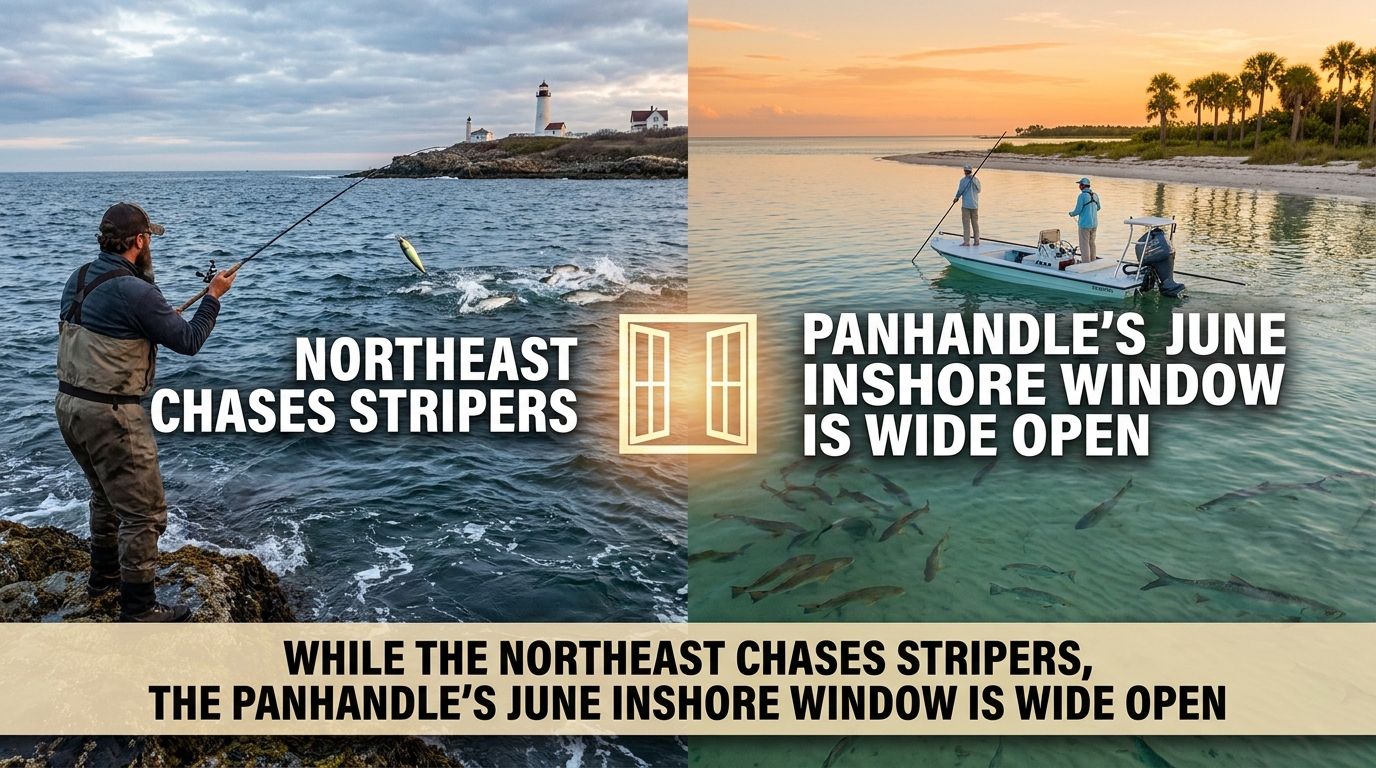
Up in Jamaica Bay, the docks are buzzing. Striped bass are stacked on the marsh edges and bridge pilings around the Rockaways, and every report from Long Island to Maine is leading with the same fish. Meanwhile, 1,300 miles south, the bays from Mexico Beach to Destin are doing something the Northeast crowd would love to have right now — they're sitting quiet, glassy, and full of feeding fish, with almost nobody on them.
If you live on the Panhandle or you're planning a Gulf Coast trip this month, that's the headline. The Northeast striper frenzy is great theater, but the real opportunity this week is in your own back bay.
What the Northeast Reports Are Telling Us
The June 4 reports out of Rockaway and Jamaica Bay, Long Island and NYC, Massachusetts, Cape Cod, and coastal New Hampshire and Maine all lead with one fish: striped bass. Mackerel and herring schools are feeding the bite. Jamaica Bay's back-bay fishery is dialed in around marsh cuts, channel drop-offs, and bridge structure — classic ambush-predator water.
It's a great bite. It's also a crowded one. Every captain, kayaker, and surfcaster from Rockaway Inlet to Provincetown is pointed at the same fish in the same water.
Why the Panhandle Bays Are Quiet Right Now
Here's the part Gulf Coast anglers tend to miss: late May through mid-June is the most underrated booking window of the entire year on the Panhandle. The reason is simple — the offshore fleet is somewhere else.
Alabama's red snapper season opened May 22 on a 664,522-pound quota, and the federal Gulf opener landed over Memorial Day weekend. That pulls the majority of offshore boats — and the offshore-minded anglers who book them — out past the bar and onto deep structure. East Bay, St. Andrew Bay, and Choctawhatchee Bay get left alone.
Moderate late-spring water temps keep speckled trout, redfish, and flounder feeding hard on shallow grass flats before they scatter to their deep-summer haunts. The fish are here, the pressure isn't, and the calendar is open.
What's Actually Biting — Trout, Reds, and Flounder
The inshore Big Three are all on right now:
- Speckled trout — Hitting topwaters and soft plastics on grass flats at first light. Florida's slot is 15–19 inches with a 3-fish bag limit across most Panhandle waters. Get on them early; once the sun hits the grass, the bite shuts off.
- Redfish — Cruising marsh edges and oyster bars, eating cut bait, live shrimp, and gold spoons. The same structure-and-ambush playbook a Jamaica Bay striper guy already knows — just with a copper-colored fish and a tailing wake.
- Flounder — Sitting on sandy edges where the grass meets a channel cut. Slow-dragged jigs and live finger mullet do the work.
If you've fished stripers on bridge pilings or marsh drains, you already understand how Panhandle redfish set up. The bait is different — finger mullet and shrimp instead of mackerel and bunker — but the instinct is the same fish in the same kind of spot.
Why This Window Closes Fast
Two things end the sweet spot. First, summer heat scatters trout off shallow flats into deeper holes by late June. Second, the broader summer tourism wave hits the Panhandle in earnest after Father's Day, and inshore guide calendars start filling out weeks in advance.
There's also a 2026-specific wrinkle worth knowing. With the federal red snapper season cancelled in Florida this year, a lot of would-be offshore anglers are going to start looking inshore — and when they do, this quiet window won't be quiet anymore. The next anchor date on the Panhandle calendar is the gag grouper season, September 1 through October 1, and that one will move fast too.
How to Book the Window
If you're a local, this is the week to call your guide. If you're traveling in — especially from a striper state where June means crowds and traffic — the setup is genuinely easy:
- Grab a short-term license in two minutes. Florida just restored online 3-day and 7-day saltwater licenses through GoOutdoorsFlorida.com. We walked through the whole process in our June 3 guide for Panhandle visitors.
- Book a private inshore charter. A 4-hour inshore trip with Captain Dan out of Mexico Beach runs $500 for 1–3 anglers, gear and licenses included. Ask for a first-light start — that's when the trout bite is on.
- Have a Plan B. Any honest guide will tell you summer afternoons bring thunderstorms. A good captain has a backup plan for wind, weather, and shifting tides.
The Takeaway
Let the Northeast have its stripers. The Panhandle's inshore bays are doing something you only get a few weeks a year — fishing well, feeding hard, and sitting nearly empty. If you've been waiting for the right time to book a trip out of Mexico Beach, this is the window. Don't wait until the offshore crowd looks inshore and figures it out too.
Want reports like this in your inbox before the bite peaks? Subscribe to our newsletter for weekly Panhandle fishing updates, booking windows, and Captain Dan's notes from the water.